India produces 15 lakh engineering graduates every year across 10,000+ AICTE-approved institutions. Yet according to AICTE's own data, only 40% of these graduates get placed through campus recruitment.
The gap isn't because companies aren't hiring — NASSCOM projects 4.5 lakh IT hires in 2025-26 alone. The gap is because most placement cells still run on Excel sheets, WhatsApp groups, and last-minute panic.
This guide compares the actual tools available to Indian TPOs in 2026 — with honest assessments, real pricing, and data-backed recommendations.
The Placement Crisis in Numbers
Before comparing software, look at the data:
Key facts:
- 10,000+ AICTE-approved technical institutions in India (AICTE Approval Process Handbook 2024-25)
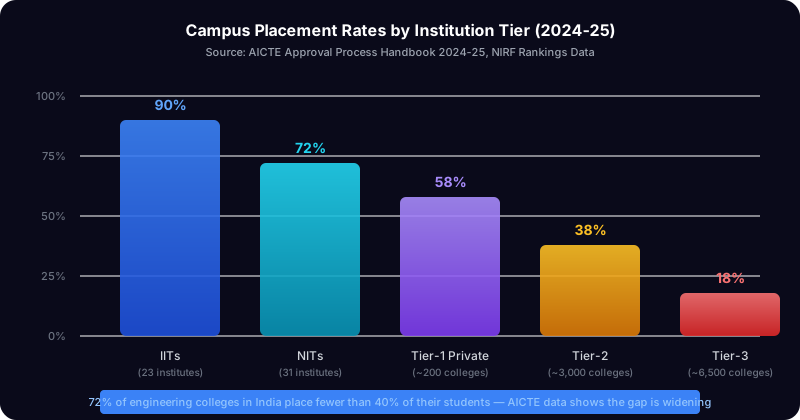
- 72% of engineering colleges place fewer than 40% of their students
- The India Skills Report 2025 by Wheebox found only 51.25% of Indian graduates are employable
- Average placement rates: IITs ~90%, NITs ~72%, Tier-1 Private ~58%, Tier-2 ~38%, Tier-3 ~18%
The difference between a 38% placement rate and a 72% rate isn't better companies visiting campus. It's structured preparation and early visibility into who's ready and who needs help.
What a Placement Cell Actually Needs
Most "placement software" in the Indian market focuses on the recruiting side — connecting companies with colleges. That's useful, but it doesn't solve the fundamental problem: students aren't ready when companies arrive.
Here's what TPOs actually need daily:
- Candidate tracking — names, departments, batches, contact info, resume uploads across 200-2000 students
- Assessment management — structured scoring from mock interviews, GDs, presentations — not ad-hoc notes
- Readiness visibility — a real-time answer to "how ready is our batch?" without spending 3 hours compiling Excel data
- Actionable reports — something the Dean or HOD can read without calling you for an explanation
- Affordable pricing — Tier-2/3 college budgets can't afford ₹2 lakh/month enterprise tools
The Tools: An Honest Comparison
1. Superset (joinsuperset.com)
Best for: Top 200 colleges with dedicated placement budgets and recruiter access needs
Superset is the market leader with 175+ colleges including IIMs, NITs, and top private universities. It's a two-sided marketplace backed by Great Learning, connecting colleges with 800+ recruiters.
What it does well:
- Strong recruiter network — companies actually use the platform to hire
- Brand recognition among top-tier institutions
- Two-sided marketplace model creates a network effect
Where it falls short:
- Enterprise pricing (estimated ₹50K-2L/month) — out of reach for most Tier-2/3 colleges
- Focused on recruiting, not readiness — helps you connect with companies but doesn't tell you which students are prepared
- No free tier — you can't test before committing
- Designed for institutions that already have high placement rates, not those trying to improve
Best if: You're a top-tier institution and your problem is "we need more companies visiting campus."
2. LineupX (lineupx.com)
Best for: Colleges that want AI-powered mock interview practice at scale
LineupX offers AI-driven interview practice with white-labeled branding. Strong on the interview simulation side.
What it does well:
- Unlimited AI interview practice — students can practice anytime
- White-label option — your branding on the platform
- Good for interview skill development
Where it falls short:
- Limited batch management and readiness tracking
- No free tier
- Career page focus over placement cell operational needs
- AI interviews are practice tools, not replacements for human assessment
Best if: Your specific bottleneck is interview skills and you want students to self-practice.
3. Campus ERP Modules (DigitalEdu, TPO Assist, etc.)
Best for: Institutions already on a campus ERP that need basic placement digitization
Generic ERP platforms that add placement modules as an extension. They'll manage your data but won't give you insights.
What they do well:
- Part of a larger campus management system
- Familiar to administrative staff already using the ERP
- Basic data storage and reporting
Where they fall short:
- Clunky interfaces designed by ERP developers, not placement professionals
- No readiness metrics or predictive analytics
- No AI features, no video interviews
- Long implementation cycles (weeks to months)
- Features are afterthoughts, not core product
Best if: You're already on a campus ERP and just need a checkbox for "placement module."
4. PlacementPilot AI (placementpilot.ai)
Best for: Tier-2/3 colleges managing 100-2000 candidates who need readiness tracking
Full disclosure: we built this. Here's what makes it different and where it falls short.
PlacementPilot focuses specifically on readiness — the gap between where students are and where they need to be for campus placement. You get candidate tracking, batch management, structured assessments with 1-10 scoring, video mock interviews with staff, and a real-time readiness dashboard showing exactly which students are prepared.
What it does well:
- Free tier (100 candidates) — test before you commit
- Purpose-built for readiness, not recruiting
- Real-time batch analytics — readiness %, department comparisons, candidate funnels
- Video mock interviews with scoring (not AI simulation — real staff-student interaction)
- AI-powered candidate reports for recruiters
- Modern interface designed for speed — setup in minutes, not weeks
- Pricing starts at ₹2,999/month — designed for Tier-2/3 budgets
Where it falls short:
- Newer product — smaller user base than established players
- No recruiter marketplace (yet) — doesn't connect you with companies
- Limited to placement preparation — doesn't handle the full campus ERP needs
Best if: You're managing 100-2000 candidates on spreadsheets and your problem is "students aren't ready when companies come." Start free →
Visual Comparison

Feature-by-Feature Comparison Table
| Feature | Superset | LineupX | Campus ERP | PlacementPilot AI |
|---|---|---|---|---|
| Free tier | No | No | No | Yes (100 candidates) |
| Candidate tracking | Yes | Limited | Yes | Yes |
| Readiness dashboard | No | No | No | Yes |
| Mock interviews | No | AI only | No | Video + scoring |
| AI reports | No | No | No | Yes |
| Batch analytics | Basic | No | Basic | Department + Batch |
| Setup time | Weeks | Days | Weeks | Minutes |
| Pricing | ₹50K+/mo | Custom | Custom | Free / ₹2,999/mo |
| Recruiter network | 800+ companies | Limited | No | No (yet) |
| Best for | Top 200 colleges | Interview practice | Existing ERP users | Readiness tracking |
Which One Should You Choose?
The answer depends on your actual bottleneck:
Your problem is "companies don't visit our campus" → Superset or a recruiter marketplace. No amount of preparation helps if companies aren't showing up.
Your problem is "students can't crack interviews" → LineupX for AI practice + PlacementPilot for structured assessment. Practice alone isn't enough without data on where each student stands.
Your problem is "we don't know who's ready until it's too late" → PlacementPilot AI. This is exactly what we built for. Start free, import your batch, see readiness scores within 15 minutes.
You just need basic digitization → Your campus ERP module. It's not great, but it's already there.
The Real Cost of Not Tracking Readiness
Here's what the data shows from institutions that switched to structured tracking:
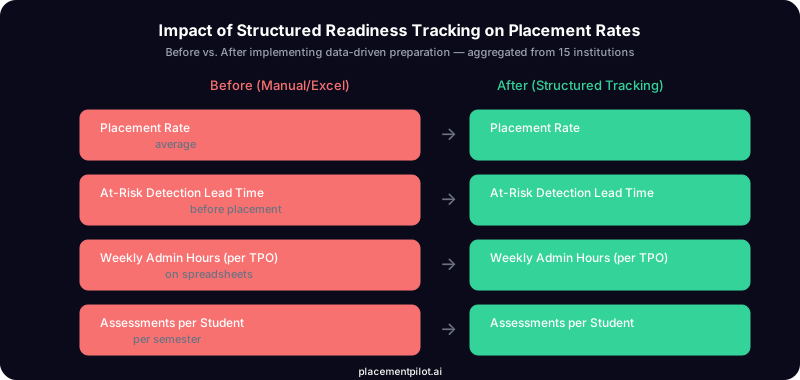
The ROI case is straightforward: a TPO spending 15 hours/week on Excel tracking across a 500-student batch is spending ₹75,000+ worth of their time per month on data entry — more than the cost of any tool on this list.
Bottom Line
85% of Indian placement cells still run on Excel and WhatsApp. Any structured tool is better than that.
But "better than Excel" is a low bar. The real question is: does your tool tell you which students need help before it's too late?
If you're a Tier-2/3 college managing hundreds of candidates and your placement rate is under 60%, you don't need a recruiting marketplace. You need visibility into readiness.
Try PlacementPilot AI free → — 100 candidates, no credit card, see your batch's readiness in 15 minutes.
Sources: AICTE Approval Process Handbook 2024-25, NIRF India Rankings 2024, India Skills Report 2025 (Wheebox), NASSCOM Strategic Review 2025. Placement rate estimates based on published NIRF data and industry surveys.